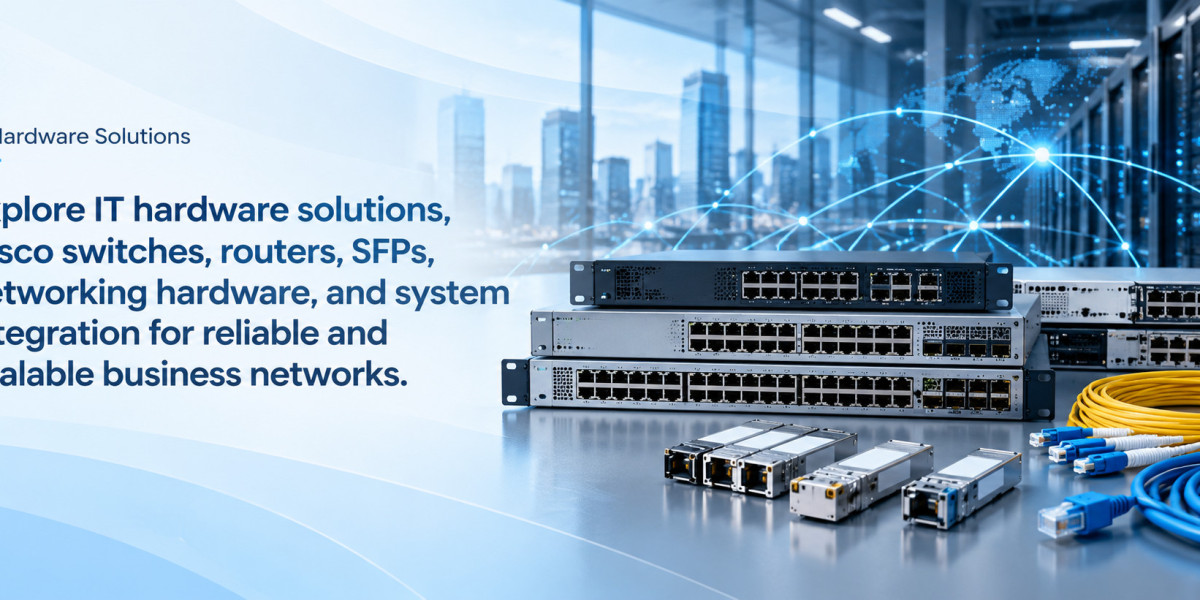

In today’s digitally connected business environment, reliable technology infrastructure is no longer optional. Organizations depend on computers, servers, switches, routers, storage systems, wireless equipment, security devices, and other technologies to keep their daily operations running efficiently. A well-planned IT Hardware Solution provides businesses with the infrastructure they need to support communication, data management, networking, security, and long-term growth.
As businesses become increasingly dependent on cloud applications, remote connectivity, digital communication, and data-driven operations, choosing the right hardware has become more important than ever. Organizations need dependable equipment that can handle current workloads while providing enough flexibility to accommodate future requirements. This is where professional system integrators and experienced network hardware resellers can make a significant difference.
What Is an IT Hardware Solution?
An IT Hardware Solution is a combination of physical technology products, infrastructure components, and professional services designed to meet an organization's specific IT requirements. Rather than purchasing individual devices without considering how they will work together, businesses can develop an integrated infrastructure where networking, computing, storage, security, and connectivity technologies operate efficiently as one environment.
A comprehensive IT hardware solution may include servers, switches, routers, SFP modules, network accessories, storage devices, firewalls, wireless equipment, cables, racks, and other infrastructure components. The exact hardware depends on the organization's size, industry, applications, network architecture, performance requirements, and future plans.
The objective is not simply to purchase hardware. The objective is to create a reliable technology environment that supports business operations and provides consistent performance.
Why Businesses Need a Reliable IT Hardware Solution
Businesses rely on their networks for almost every aspect of their operations. Employees need reliable connectivity to communicate with colleagues, access applications, share information, manage customer relationships, and collaborate on projects. When network infrastructure becomes unreliable, even a small technical problem can affect productivity.
A professionally designed IT hardware solution helps businesses establish dependable connectivity and improve infrastructure performance. Properly selected hardware can also help organizations manage increasing numbers of users, devices, applications, and data without constantly replacing their infrastructure.
Another important consideration is scalability. A business may have relatively simple requirements today but significantly larger requirements in the future. Selecting scalable hardware allows organizations to expand their infrastructure without completely redesigning their networks.
The Role of a System Integrator
A System Integrator plays an important role in connecting different technologies into a cohesive IT environment. Instead of treating every hardware component as an isolated product, a system integrator evaluates how different devices will communicate and operate together.
A system integrator can help organizations assess their existing infrastructure, identify performance limitations, determine hardware requirements, and develop an appropriate architecture. This approach can be particularly valuable for organizations managing complex environments with servers, switches, routers, storage systems, wireless networks, and security technologies.
The value of system integration goes beyond hardware procurement. Proper integration can help ensure that equipment is compatible, appropriately configured, and capable of supporting the organization's operational requirements.
Understanding Cisco Switches
Switches are fundamental components of modern network infrastructure. They connect devices within a network and allow information to move efficiently between computers, servers, access points, printers, and other connected equipment.
Cisco Switches are widely used in enterprise networking environments because businesses often require dependable connectivity, network management capabilities, security features, and scalability. The appropriate switch depends on factors such as the number of connected devices, required throughput, network architecture, management requirements, and available infrastructure.
For smaller environments, organizations may require straightforward switching capabilities, while larger businesses may need advanced managed switches capable of supporting high-density connections and sophisticated network architectures.
Choosing the right switch should therefore involve more than comparing specifications. Businesses should consider how the switch will fit into their complete network design and whether it can support future expansion.
Exploring Cisco Products for Business Networks
Cisco offers a broad ecosystem of networking technologies designed for organizations with different infrastructure requirements. Cisco Products can be used across enterprise networks, data centers, branch offices, and other technology environments.
The broader product ecosystem can include switches, routers, wireless technologies, security solutions, optical networking components, and other infrastructure technologies. Organizations can select equipment according to their specific networking architecture and operational requirements.
Working with an experienced IT hardware provider can make product selection easier because businesses can evaluate compatibility, performance, availability, and deployment requirements before making purchasing decisions.
The Importance of Cisco Routers
Routers play a different role from switches. While switches primarily connect devices within a network, routers help connect different networks and direct traffic between them.
Cisco Routers can be used in a variety of networking environments where organizations need reliable routing, connectivity, traffic management, and network segmentation. Businesses with multiple locations, branch offices, remote users, or complex network architectures may require carefully selected routing equipment.
A router should be selected according to factors such as bandwidth requirements, number of connections, network topology, security considerations, and expected growth. Choosing equipment that matches the organization's actual requirements can help prevent unnecessary expenses while ensuring adequate performance.
The Role of Cisco SFPs in Network Connectivity
Optical connectivity is an important part of modern networking infrastructure. Cisco SFPs are transceiver modules that can provide connectivity between compatible networking equipment and fiber or copper infrastructure, depending on the module type.
SFP technology gives organizations flexibility when designing and expanding their networks. Instead of replacing an entire networking device when connectivity requirements change, compatible transceiver modules can provide different connection options.
Businesses should always verify compatibility before purchasing SFP modules. Factors such as transmission distance, connector type, fiber type, speed, and equipment compatibility can influence which module is appropriate for a particular network.
Choosing the Right Networking Hardware
Networking Hardware forms the foundation of an organization's digital infrastructure. It includes switches, routers, transceivers, access points, network interface components, cables, and other equipment required to establish reliable connectivity.
Selecting networking hardware should begin with understanding the organization's requirements. The number of users, connected devices, applications, bandwidth consumption, network architecture, and future expansion plans can all influence hardware selection.
Performance is another important consideration. Hardware that works well for a small office may not be suitable for a growing enterprise with hundreds or thousands of connected devices. Businesses should therefore consider both current requirements and expected future demand.
Why Work With a Network Hardware Reseller?
A professional Network hardware reseller can help organizations source the equipment required for their infrastructure projects. Instead of purchasing individual products from multiple sources, businesses can work with a specialist that understands networking technologies and hardware compatibility.
An experienced reseller can help customers identify suitable products based on technical specifications, availability, compatibility, and project requirements. This can simplify procurement and reduce the risk of purchasing hardware that does not integrate properly with the existing infrastructure.
For organizations managing large technology deployments, working with a reliable hardware reseller can also make procurement more organized and efficient.
Building a Future-Ready IT Infrastructure
Modern businesses should think beyond their immediate hardware requirements. Technology environments continue to evolve as organizations adopt cloud computing, artificial intelligence, automation, remote working, virtualization, and increasingly data-intensive applications.
A future-ready IT hardware solution should therefore provide sufficient performance, scalability, compatibility, and flexibility. Infrastructure should be designed so that organizations can introduce new technologies without having to replace every component of their existing environment.
This is one of the major advantages of taking an integrated approach to IT infrastructure. Instead of purchasing hardware based only on today's requirements, businesses can create an architecture capable of adapting to changing technological demands.
How to Select the Right IT Hardware Partner
Choosing the right IT hardware partner requires careful consideration. Businesses should look for a provider with experience across networking, servers, storage, connectivity, and other infrastructure technologies.
Technical knowledge is particularly important because hardware procurement is not simply about finding products at competitive prices. The equipment must also be compatible with the existing environment and suitable for the intended application.
A dependable provider should understand the organization's requirements, provide appropriate product options, and help customers make informed purchasing decisions. This approach can reduce infrastructure risks and contribute to a more reliable IT environment.
Conclusion
A dependable IT Hardware Solution provides the foundation for modern business operations. From Cisco Switches and Cisco Routers to Cisco SFPs and other networking hardware, every component can play an important role in creating a reliable and scalable infrastructure.
Working with a knowledgeable System Integrator or experienced Network hardware reseller can make the process of designing and sourcing IT infrastructure considerably easier. Instead of purchasing hardware without considering the bigger picture, businesses can develop an integrated technology environment designed around their current requirements and future objectives.
As organizations continue to depend on digital technologies, investing in reliable infrastructure can help improve connectivity, support productivity, and provide the scalability required for long-term growth.
Frequently Asked Questions
What is an IT Hardware Solution?
An IT Hardware Solution is a collection of physical technology products and infrastructure components designed to meet an organization's computing, networking, storage, connectivity, and security requirements.
What does a System Integrator do?
A System Integrator helps organizations combine different technology components into a cohesive IT environment. They can assist with infrastructure planning, hardware selection, compatibility, configuration, and integration.
What are Cisco Switches used for?
Cisco Switches are used to connect devices within a network and facilitate communication between computers, servers, access points, and other network-connected equipment.
What are Cisco Routers used for?
Cisco Routers are used to connect different networks and direct data traffic between them. They are commonly used in enterprise networks, branch offices, and other environments requiring network connectivity and routing.
What are Cisco SFPs?
Cisco SFPs are transceiver modules used to provide compatible network connections, including fiber-optic and copper connectivity depending on the specific module. They can provide flexibility when expanding or modifying network infrastructure.
Why is networking hardware important?
Networking hardware provides the physical infrastructure required for devices and systems to communicate. Reliable networking equipment can support connectivity, data transfer, network performance, and business operations.
How can a Network hardware reseller help a business?
A Network hardware reseller can help businesses identify, source, and procure appropriate networking products. An experienced reseller can also help customers consider compatibility, technical requirements, availability, and future scalability.
How do I choose the right IT hardware for my business?
The right hardware depends on factors such as the number of users and devices, bandwidth requirements, applications, network architecture, security requirements, scalability, and budget. Professional guidance can help businesses select equipment that matches their specific infrastructure requirements.
Is Cisco hardware suitable for growing businesses?
Cisco offers networking technologies for a wide range of environments. The appropriate equipment depends on the organization's size, network architecture, performance requirements, and future expansion plans.
Why is scalability important when purchasing IT hardware?
Scalable hardware allows organizations to expand their infrastructure as their requirements grow. Planning for future expansion can reduce the need for frequent hardware replacement and help businesses build a more sustainable technology environment.